
Food delivery has evolved from simple phone calls and paper menus into a sophisticated ecosystem powered by artificial intelligence, robotics, and advanced logistics. What began as a convenience has become a data-driven industry where algorithms predict cravings, autonomous vehicles handle last-mile trips, and kitchens operate with minimal human intervention. Technology is reshaping every stage of the process, from the moment a customer opens an app to the final handoff at the doorstep.
Artificial Intelligence Powers Personalization and Efficiency
Artificial intelligence sits at the center of modern food delivery platforms. Recommendation engines analyze past orders, time of day, weather, location, and even broader behavioral patterns to suggest meals that match individual preferences. These systems can anticipate what a customer might want before a search begins, improving both satisfaction and average order value.
Beyond the consumer interface, AI optimizes operations behind the scenes. Demand forecasting models help restaurants and platforms predict peak periods with greater accuracy, reducing waste and ensuring the right staffing levels. Route optimization algorithms process real-time traffic, weather, and order density to assign the most efficient paths for couriers. The result is shorter delivery times, lower fuel use, and more reliable estimated arrival windows. Dynamic pricing tools adjust fees and incentives based on current demand, balancing supply and demand while improving driver earnings during busy periods.
Conversational AI and chat-based ordering are also gaining ground. Customers can increasingly place and track orders through natural language interfaces rather than navigating traditional app menus, further simplifying the experience.
Autonomous Robots and Drones Transform Last-Mile Delivery
The last mile has long been the most expensive and complex part of food delivery. Autonomous technology is beginning to address this challenge. Sidewalk delivery robots navigate pedestrian areas using sensors and mapping systems, while drones handle short aerial routes in suitable locations. These systems are already operating commercially in selected cities and campuses.
Analysts project that autonomous delivery could eventually reduce per-order costs substantially. Current deployments of robots and drones often operate more cheaply than traditional human couriers in higher-labor-cost markets, with longer-term projections suggesting costs could fall toward one dollar per drop in mature scenarios. Penetration remains low today—well under one percent of global orders—but growth is expected as regulations mature and fleets expand. Platforms are partnering with robotics and drone specialists to integrate these options alongside human couriers, giving customers choices based on speed, cost, or preference.
In some advanced pilots, the process approaches full automation. Food can be prepared with robotic assistance and then flown or driven to the customer with limited human handling, aiming for faster service and lower overall labor input.
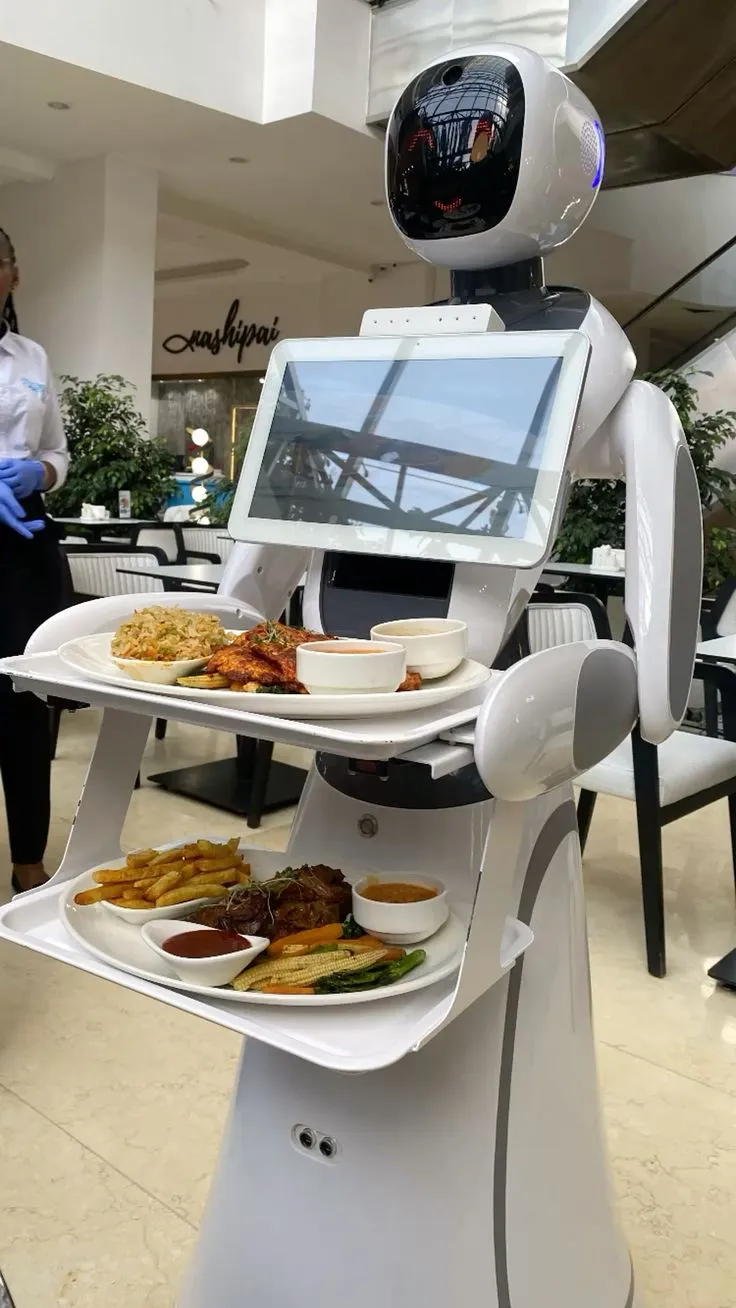
Kitchen Automation and the Rise of Delivery-Focused Facilities
Technology is changing food preparation as well. Robotic systems in commercial kitchens can handle repetitive tasks such as assembling bowls, sorting ingredients, or managing sauces. AI-powered kitchen displays coordinate multi-item orders so components finish at the same time, improving accuracy and speed.
Dark kitchens, also known as cloud or ghost kitchens, have expanded rapidly to serve delivery demand exclusively. These facilities operate without dining rooms and often support multiple virtual brands from a single location. AI-driven inventory management, predictive ordering, and logistics software make the model more efficient by matching production closely to expected demand and minimizing waste. The approach allows restaurants to expand geographic reach without the overhead of traditional storefronts.
Enhancing the Customer Experience with Real-Time Tools
Customers benefit from greater transparency and control. Real-time GPS tracking, precise estimated arrival times, and status notifications have become standard. Contactless options—ranging from contactless payments to no-contact drop-offs—remain popular for convenience and preference. Subscription models and loyalty programs use data to offer personalized perks, while voice ordering and integration with smart devices expand accessibility.
These features reduce uncertainty and friction. When customers know exactly when their meal will arrive and can adjust preferences easily, satisfaction rises and repeat ordering becomes more likely.
Challenges and the Road Ahead
Despite rapid progress, several hurdles remain. Regulatory frameworks for drones and sidewalk robots vary by city and country, slowing broader deployment. Public acceptance, safety considerations, weather limitations, and integration with existing urban infrastructure require ongoing attention. Cost savings from autonomy will depend on scale, density of orders, and continued technological refinement.
Labor impacts also warrant consideration. While automation may reduce certain delivery and kitchen roles, it creates demand for new skills in robotics maintenance, data analysis, and system oversight. Platforms that balance efficiency with responsible workforce transitions are more likely to sustain long-term success.
Looking forward, the industry is moving toward tighter integration of AI, robotics, and logistics. Meal planning assistants that generate weekly recommendations based on dietary needs, fully autonomous production-to-delivery chains in dense urban zones, and hyper-local dark kitchen networks supported by predictive analytics are all under active development. Sustainability efforts—such as optimized routes that cut emissions and packaging innovations—will likely grow alongside convenience features.
Technology is not merely accelerating food delivery; it is redefining the relationship between restaurants, platforms, and customers. Orders are becoming more personalized, fulfillment more efficient, and the overall experience more seamless. As these tools mature and scale, the simple act of ordering a meal will continue to feel faster, smarter, and more tailored than ever before. The companies and restaurants that thoughtfully adopt these capabilities will shape how the next generation of diners experiences convenience.
Read more – gloryhouseworld.com